
Our home turf in southeast Los Angeles County, minutes from our Uptown Whittier office.
Toileting & Incontinence Care For Seniors
Get Care Today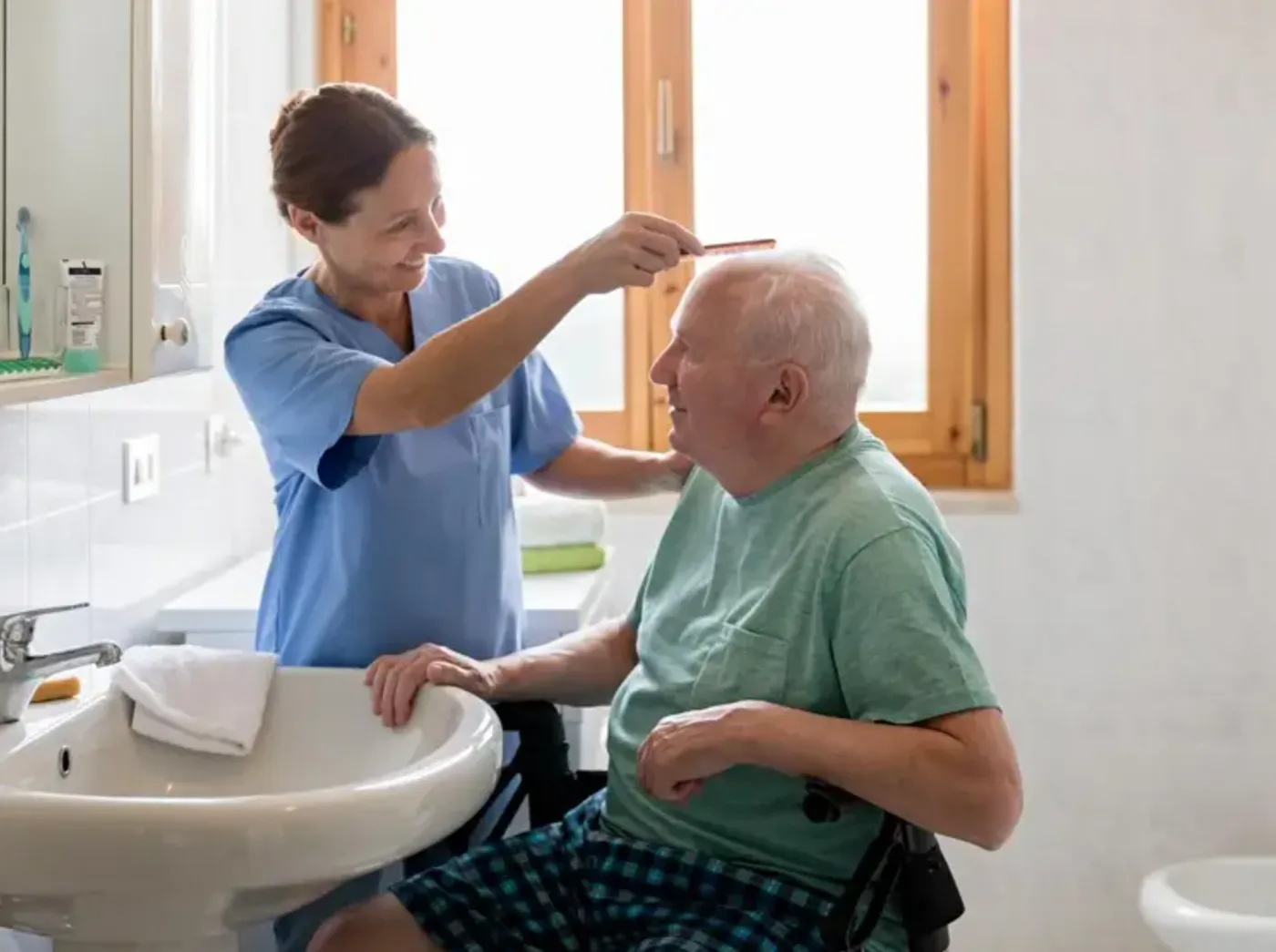
Toileting & incontinence care for seniors is essential for dignity and comfort. Aging can make bathroom visits challenging, and incontinence issues may arise. Our compassionate caregivers provide discreet, respectful assistance, ensuring seniors feel safe and supported.
Toilet Assistance For Elderly
It is crucial to provide them with a comfortable environment where they do not feel ashamed for asking for assistance. Our caregivers excel at providing such a compassionate environment and are trained to provide toileting assistance and manage incontinence. This ensures that they never have to feel ashamed and can live with dignity.
What is Toilet and Incontinence Care?
Toilet and Incontinence Care involve providing patients with assistance and care for any challenges related to going to the toilet that your loved ones may face. This can be anything from assisting them with using a urinal or commode, dealing with any accidents, or helping them manage incontinence issues. Incontinence relates to mental or physical problems that cause the elderly to lose control of their bladder and bowels. Our caregivers are trained to deal with this to provide optimum caregiver incontinence care.
What tasks are part of Toilet and Incontinence Care?
Our caregivers are trained to perform various tasks to ensure complete toilet care for your loved ones. These tasks include:
- Toilet assistance for elderly
- Managing incontinence issues
- Taking care of accidents
- Help and encouragement for self-care
- A loving environment to ensure comfort
- Professional care
- Optimizing bowel functionality
Our caregivers are ready to perform all these tasks and deal with any related situations. This ensures that your loved ones get the best care possible in a comfortable environment.
ONLINE IN-HOME CARE APPLICATIONIt is essential to understand that while the elderly are more liable to develop incontinence issues, these problems are not necessarily normal. If your loved one is elderly and believes their issues are normal, they are not. Therefore, in addition to getting toilet and incontinence care, you must pursue medical assistance as there may be a physical condition causing it. You mustn’t ignore psychological help because if physical conditions aren’t the reason, the incontinence is likely related to a mental issue.
When the elderly realize that they are having trouble going to the toilet, they may feel embarrassed about it. To prevent their loved ones and others from being burdened or prevent accidents, they may isolate themselves, taking a toll on their mental health. Talking to them about incontinence issues with loved ones can be awkward too, so it is a good idea to bring in a professional who knows how to deal with such situations. For example, our staff is well-versed in dealing with these issues. Additionally, seeking psychological help for them is a viable option too.
How do you assist with toileting?
We assist with toileting in a variety of ways. This includes:
- Using the urinal and commode
- Help with standing up after toileting
- Providing accessible toileting options
- Assistance in cleaning
- Assistance with supplies
How can the elders wipe themselves?
Elders can wipe themselves by using toilet paper or wet tissues. If they are having trouble, then encouragement is a way that may allow them to get better at wiping themselves gradually. Additionally, providing them with assistance by holding onto them as they bend is one way to wipe themselves. If they still have trouble, of course, then our staff are trained to help them wipe themselves.
What is the best way to approach toileting with individuals with Alzheimer’s?
People with Alzheimer’s may face many problems when it comes to toileting due to memory loss and incontinence issues. To take care of an incontinent patient with Alzheimer’s, you can take the following approaches:
- Establishing a routine
- Identifying signs that patients want to go to the toilet
- Keeping calm when accidents happen
- Taking preventative measures
- Always being prepared
Can dementia patients forget how to poop?
In later stages of dementia, patients often struggle to remember things, resulting in them not remembering how the urge to go to the toilet may feel. Other issues could be not remembering what the bathroom looks like, mobility issues, and not knowing when to communicate about going to the bathroom.
How do you clean an older person after pooping?
Suppose an older person is having issues wiping themselves. In that case, you can clean them using toilet paper or wet tissues by wiping the area where urination or excrement has taken place. You must wear disposable gloves during this process and wash your hands after.
How do you treat incontinence in the elderly?
There are various ways in which you can treat incontinence in the elderly. We use these strategies as part of our incontinence care for the elderly too. These are:
- Giving regular fluids to prevent bladder irritation
- Using bathroom regularly
- Keeping a bedpan nearby
- Providing encouragement
- Providing high fiber foods
- Using glycerine suppositories for lubrication
What is the best way to deal with incontinence?
The best way to deal with incontinence is to get medical help as there may be an underlying physical or mental issue that is causing it. Our incontinence care services simply serve as a bridge to deal with, but medical help is the way you should go for. Additionally, a compassionate environment where patients can feel comfortable is also essential, which we provide.
How can an elderly person stop wetting the bed?
An elderly person who is having trouble with wetting the bed can make use of the following strategies:
- Going to the bathroom before bed
- Not drinking before sleeping
- Taking medicines prescribed by a doctor for bladder issues
- Using a bed-wetting alarm system.
Can sanitary pads be used for incontinence?
You should avoid using sanitary pads for incontinence issues under any circumstance. They may be cheaper, but they are designed to stay damp, which can make your skin very sore. Therefore, we recommend incontinence pads that are designed for these issues.
What products are available for incontinence?
There are a variety of products that can help with incontinence. These are:
- Incontinence pads
- Incontinence pants
- Skin Care and hygiene products
- Special clothing made for incontinent patients.
Should you change your pad every time you pee?
Yes, it would be best to change your incontinence pads whenever they are soiled, or leakage occurs. If you do not, this can lead to a build-up of foul odors and bad hygiene, which is not an ideal situation. Even if you have to change your incontinence pads multiple times a day, do not hesitate to do so. You must keep your comfort and hygiene prioritized.
Are incontinence pads better than pads?
Yes, incontinence pads are designed for incontinence issues and, as such, provide a lot more comfort as opposed to pads. Pads may be cheaper, but the technology is designed to stay damp, which can cause discomfort and skin soreness if leakage occurs.
How often do incontinence pads need to be changed?
The amount of times you will be changing your pad in a day depends on how much leakage occurs, but typically this will be between 4-6 times a day.
Locations We Serve
Proudly providing in-home senior care across Los Angeles & Orange County.
Established neighborhoods east of Los Angeles where many families are caring for a parent at home.
From Brea down through Anaheim, with quick access across the county line from Whittier.
- Brea
- La Habra
- Fullerton
- Placentia
- Yorba Linda
- Buena Park
- Anaheim
- Cypress
- Stanton
- La Palma
- Villa Park
The heart of the county, close to the hospitals and specialists families travel to most.
- Santa Ana
- Garden Grove
- Westminster
- Tustin
- Fountain Valley
- Irvine
Beach communities where staying close to the water is part of what home means.
- Seal Beach
- Los Alamitos
- Huntington Beach
- Costa Mesa
- Newport Beach
- Corona Del Mar
- Laguna Beach
- Dana Point
- Capistrano Beach
- San Clemente
Master-planned communities and hillside neighborhoods from Aliso Viejo to San Juan Capistrano.
- Aliso Viejo
- Lake Forest
- Laguna Hills
- Laguna Niguel
- Laguna Woods
- Mission Viejo
- Ladera Ranch
- Rancho Santa Margarita
- San Juan Capistrano