

Recently updated on March 16th, 2026 at 07:22 am
30-Second Summary
- Hydration for seniors becomes critical as water levels naturally decline with age.
- Proper hydration supports fall prevention, cognitive health, and heart function.
- Structured routines and caregiver support address reduced thirst signals.
- Professional live-in home care services help ensure safe, consistent hydration for older adults.
How Hydration Changes As You Age
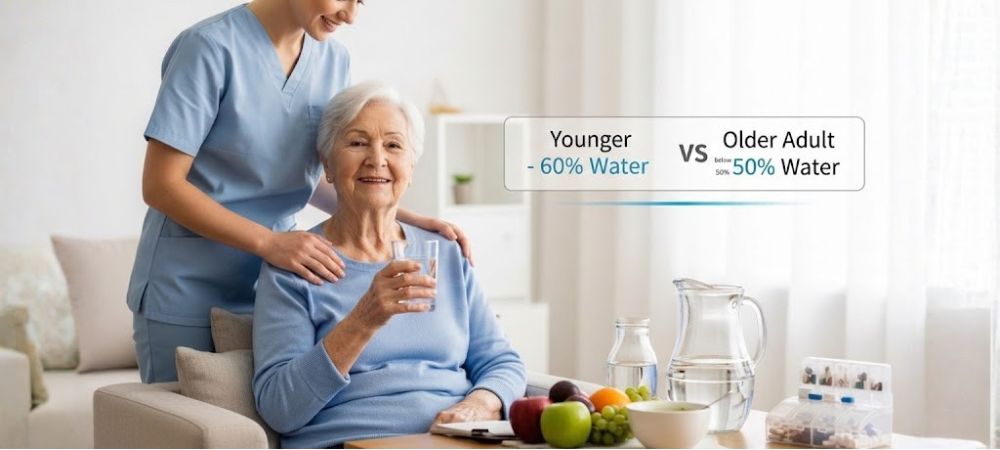
As we age, the body’s water content gradually decreases, reducing hydration for seniors and affecting overall health. In younger adults, water makes up about 60% of body weight, but in older adults, it can fall below 50%. This decline impacts the body’s ability to regulate temperature, maintain circulation, and deliver nutrients efficiently. With lower water reserves, seniors have less tolerance for fluid loss, making intentional hydration for seniors essential to prevent dehydration during daily activities.
Consequences of reduced water reserves include:
- Less tolerance for fluid loss, which can lead to dizziness, fainting, or heat intolerance
- Faster dehydration during illness or extreme heat, as the body cannot compensate for lost fluids as efficiently
- Higher impact from missed fluids, affecting energy levels, cognitive function, and overall well-being
Because thirst signals weaken with age, relying on them alone is insufficient. Many older adults may not feel thirsty even when dehydrated, making hydration for seniors crucial. Factors such as reduced kidney efficiency, chronic health conditions, and medications that promote fluid loss further impact fluid balance.
Understanding the importance of hydration in elderly adults allows families and caregivers to proactively encourage intake. By establishing structured hydration routines, offering water-rich foods and beverages, and utilizing supportive care throughlive in home care services, seniors can maintain proper hydration, preserve independence, and reduce the risk of dehydration-related complications.
Why Seniors Are More Vulnerable to Dehydration?
Older adults face several age-related challenges that increase the risk of dehydration, making hydration for seniors essential for safe and independent aging.
Key Risk Factors for Dehydration in Seniors:
- Reduced sense of thirst – delays recognition of fluid needs, meaning many seniors do not feel thirsty until dehydration is already present
- Chronic health conditions – illnesses such as diabetes, kidney disease, or heart problems alter fluid balance and may increase daily water requirements
- Medications such as diuretics promote fluid loss, requiring careful attention to hydration routines
- Mobility limitations – make accessing or preparing drinks more difficult
- Cognitive decline – reduces awareness of hydration needs, making caregiver support essential
Many families ask, “Do you need more water as you get older?” The answer is yes not because the body necessarily requires more, but because water is lost more easily and retained less efficiently with age. Studies suggest that 20–30% of older adults are chronically dehydrated, especially those living alone or without daily support. Without routine reminders or structured hydration practices, dehydration can go unnoticed until complications occur.
Health Implications of Dehydration Include:
- Causes of fainting in seniors, such as low blood pressure and dizziness
- Increased confusion, fatigue, and cognitive impairment
- Higher hospitalization rates due to preventable complications
Proactive hydration habits, consistent monitoring, and supportive care, including live-in home care services, significantly improve safety, comfort, and quality of life. Intentional hydration ensures seniors maintain independence, energy, and overall well-being while reducing preventable health risks.
Health Risks Linked to Dehydration in Older Adults
Even mild dehydration can have serious consequences for older adults, often affecting multiple body systems simultaneously. Because seniors naturally have lower water reserves, small fluid losses can quickly compromise physical stability, mental clarity, and overall well-being. Recognizing early signs is critical for families and caregivers to maintain hydration for seniors and reduce preventable risks.
Common Signs of Dehydration:
- Dry mouth and lips – reduced saliva production can make speaking, swallowing, and tasting difficult
- Dark urine or decreased output – indicates inadequate fluid intake and possible kidney stress
- Dizziness or lightheadedness, particularly when standing, increases the risk of falls
- Muscle weakness – affects mobility, coordination, and ability to perform daily activities safely
- Confusion or poor concentration – often misattributed to normal aging, but may signal early dehydration
Left unmanaged, dehydration increases the likelihood of falls, making fall prevention for elderly a critical concern. Low fluid levels can lead to decreased blood pressure, impaired balance, and slower reaction times, all of which elevate the risk of injuries and hospitalizations.
Benefits of Maintaining Adequate Hydration:
- Supports healthy blood pressure regulation and cardiovascular function
- Maintains muscle strength, flexibility, and overall physical performance
- Improves balance, coordination, and response time
- Reduces dizziness, fatigue, and cognitive impairment
Ensuring consistent hydration is a foundational strategy for injury prevention and safe aging. Combining structured daily fluid intake with caregiver support, including live in home care services, helps seniors maintain independence, energy, and quality of life while reducing the health risks associated with dehydration.
How Much Water Should Seniors Drink Each Day?

A common question among families and caregivers is, how much water should an elderly person drink a day? Individual hydration needs vary depending on health status, activity level, medications, and environmental conditions such as temperature or humidity. However, general guidelines provide a practical starting point to ensure seniors maintain hydration for seniors and support overall health.
Recommended Daily Fluid Intake:
- How much water to drink a day: 6–8 cups (approximately 1.5–2 liters)
- 60-year-old woman: around 2.2 liters per day
- 70-year-old woman: around 2.2 liters per day
- 80-year-old individual: approximately 1.7–2 liters per day
These recommendations include not only plain water but also water-rich foods, such as soups, melons, cucumbers, and other fruits and vegetables, as well as milk or other beverages. Including a variety of fluids helps seniors meet hydration goals even if appetite or thirst signals are reduced.
Adjustments are often needed for chronic health conditions such as kidney or heart disease, medications such as diuretics, and seasonal factors such as hot weather or high humidity. Consulting a healthcare provider ensures that fluid intake is safe, effective, and personalized, particularly for seniors with medical concerns.
Maintaining consistent hydration supports energy levels, mental clarity, and mobility, while reducing the risk of dizziness, fainting, and hospitalizations. Combining these daily habits with caregiver support or professional services, such as live in home care services, ensures hydration becomes an intentional, manageable part of an older adult’s daily routine. Proper fluid intake is a simple yet powerful step toward aging with normal hydration and preserving independence.
Practical Hydration Tips for Seniors
Creating sustainable routines is one of the most effective ways to maintain hydration for seniors over the long term. Integrating fluid intake into daily activities ensures hydration becomes a natural, consistent habit rather than an occasional or reactive effort.
Proven Strategies for Maintaining Hydration:
- Keep water visible and accessible: Place water bottles or cups in bedrooms, living areas, and kitchens so seniors can sip fluids throughout the day without extra effort.
- Use infused water for flavor: Adding fruit slices, herbs, or mild flavorings encourages regular drinking and makes water more enjoyable for those who may resist plain water.
- Pair fluids with medications or meals: Aligning fluid intake with routine tasks, such as taking pills or having meals, builds hydration into daily schedules.
- Offer water-rich foods: Incorporate soups, melons, cucumbers, and other fruits and vegetables to provide hydration while adding essential nutrients.
- Use reminders or caregiver prompts: Alarms, sticky notes, or professional support such aslive in home care services ensure seniors drink consistently, even when they don’t feel thirsty.
Seasonal routines, particularly in colder months, are also important, promoting immunity and overall wellness while aligning with winter wellness tips for seniors.
Consistent hydration habits help seniors maintain energy levels, cognitive function, and balance, supporting overall independence and safety. When families and caregivers proactively embed these practices into daily life, older adults are more likely to age with normal hydration, reduce risks of dizziness, fatigue, or falls, and enjoy improved quality of life while staying active and engaged.
How In-Home Care Services Support Hydration
Professional caregivers play a critical role in maintaining hydration for seniors, ensuring that fluid intake is consistent, safe, and integrated into daily routines.
How Caregivers Help:
- Prepare hydrating meals and snacks: Caregivers provide water-rich foods such as soups, smoothies, melons, cucumbers, and other fruits and vegetables that naturally increase daily fluid intake.
- Offer regular fluid reminders: Gentle prompts throughout the day help seniors sip water consistently, reducing the risk of dehydration-related complications.
- Monitor early signs of dehydration: Caregivers observe changes in urine color, energy levels, dizziness, or confusion, allowing timely intervention before health issues escalate.
- Encourage water intake during daily routines: Pairing fluids with meals, medications, or light activity helps establish sustainable hydration habits.
Additional Services That Support Hydration:
- Personal care assistance: Daily support with hygiene, mobility, and routine tasks ensures fluid intake is part of a structured schedule.
- Companion care services: Social interaction encourages seniors to drink regularly while reducing feelings of isolation.
- Medication reminders with water prompts: Ensures medications are taken safely alongside adequate fluids.
- Meal preparation and nutrition support: Integrates hydrating foods seamlessly into daily meals to support overall wellness.
Round-the-clock live in home care services embed hydration into everyday life, making it intentional rather than reactive. By combining structured routines, monitoring, and nutritional support, caregivers help seniors age with normal hydration, maintain independence, and enjoy improved physical and cognitive health while staying safe and active at home.
Best Drinks for Dehydration in the Elderly
While plain water remains the cornerstone of hydration for seniors, offering a variety of beverages can significantly improve daily fluid intake. Many older adults resist drinking plain water, especially when their thirst signals are reduced or their taste perception changes. Incorporating flavorful, nutrient-rich options makes hydration more enjoyable and effective, helping seniors naturally meet their daily fluid goals.
Best Drinks for Dehydration in Elderly Adults:
- Water (plain or infused): Adding slices of fruit, herbs, or mild flavorings enhances taste without added sugar or calories, encouraging more consistent drinking.
- Herbal teas: Caffeine-free teas are hydrating and soothing, providing variety while supporting daily fluid intake.
- Low-sodium broths: Warm broths provide fluids, electrolytes, and nutrients, making them ideal for seniors with a poor appetite or dietary restrictions.
- Milk or fortified alternatives: Dairy and plant-based options contribute essential nutrients like calcium and vitamin D while supporting hydration.
- Oral rehydration solutions (if recommended): These are particularly useful during illness or when significant fluid loss occurs, as they replenish both water and electrolytes.
Understanding how to increase water intake effectively ensures that seniors maintain proper hydration, supporting balance, cognitive clarity, energy, and overall wellness. Caregiver support, including live in home care services, ensures that fluids are offered regularly and gently encouraged, helping seniors stay hydrated consistently and safely.
Providing variety in beverages not only improves compliance but also reinforces the importance of hydration among elderly adults, reducing risks such as dizziness, confusion, falls, and hospitalization.
Hydration Is a Foundation of Healthy Aging

Proper hydration for seniors is essential for safe, independent, and healthy aging. As we grow older, physiological changes such as reduced kidney function, diminished thirst perception, and lower water reserves make older adults more vulnerable to dehydration. Medications, chronic health conditions, and mobility limitations further increase the risk. Proactively maintaining adequate fluid intake is therefore critical, not optional.
Key Benefits of Staying Hydrated:
- Energy and muscle function: Adequate fluids support physical stamina, strength, and mobility, reducing fatigue and the likelihood of falls.
- Balance and coordination: Proper hydration helps maintain postural stability, coordination, and reaction times, contributing to effective fall prevention for elderly adults.
- Cognitive clarity and focus: Water is essential for brain function, supporting memory, concentration, and decision-making.
- Independence and quality of life: Seniors who stay hydrated are better able to engage in daily activities, social interactions, and self-care, enhancing overall well-being.
Embedding hydration into daily routines ensures that seniors consistently meet their fluid needs. Simple strategies include pairing drinks with meals, offering water-rich foods, using reminders, and leveraging professional support through live in home care services. These services not only provide structured fluid intake but also monitor for early signs of dehydration, ensuring seniors age with normal hydration.
Maintaining fluids supports longevity, reduces preventable health risks, and empowers seniors to live safely and independently in the comfort of their own homes. Understanding the importance of hydration in elderly adults is, therefore, a cornerstone of comprehensive senior care.
Call to Action
If you’re supporting an older loved one, Loving Homecare Inc. provides compassionate, professional care to promote hydration, safety, and dignity at home. Their caregivers integrate healthy habits into daily routines. Explore live in home care services today to help your loved one stay hydrated, independent, and safe.
FAQs
Why is hydration more important as we age?
As we age, the body’s water content decreases, increasing the risk of dehydration. Proper hydration supports circulation, temperature regulation, and cognitive function, and reduces the risk of falls and fatigue.
How much water should an elderly person drink daily?
Most seniors need 1.7–2 liters of fluids per day. Individual needs vary based on activity, health conditions, and environment. Including water-rich foods helps meet hydration goals.
What is the best way to stay hydrated for seniors?
Routine-based drinking, easily accessible fluids, and caregiver support, such as reminders and meal assistance, help seniors maintain consistent hydration in the long term.
What percentage of older adults are dehydrated?
Research estimates 20–30% of older adults experience chronic dehydration, especially those living alone or with health conditions. Regular monitoring reduces risk.
Can in-home care help with hydration?
Yes. Professional caregivers provide meal prep, reminders, and monitoring, ensuring seniors maintain safe hydration through live in home care services.