
Recently updated on March 16th, 2026 at 07:23 am
Summary
- Understanding a weight chart for senior females is essential for healthy aging.
- Senior women face unique challenges like slower metabolism, bone loss, and muscle changes. Age-based charts, BMI, and waist-to-height ratios help track healthy weight.
- Maintaining the right weight supports balance, strength, and independence.
- Learn how much a senior woman should weigh, practical strategies, and how Loving Homecare Inc. supports wellness and safety.
Introduction
As women age, their bodies change in ways that can catch them off guard.
That favorite dress may not fit the same.
Simple walks may feel more tiring.
And weight? It can sneak up or drop unexpectedly.
But here’s the thing: weight isn’t just about appearance. It’s about health, strength, and longevity.
Caregivers and seniors often ask, “How much should a senior woman weigh?”
Let’s uncover the truth and see why it matters more than you think.
Understanding the Ideal Weight Chart for Senior Women
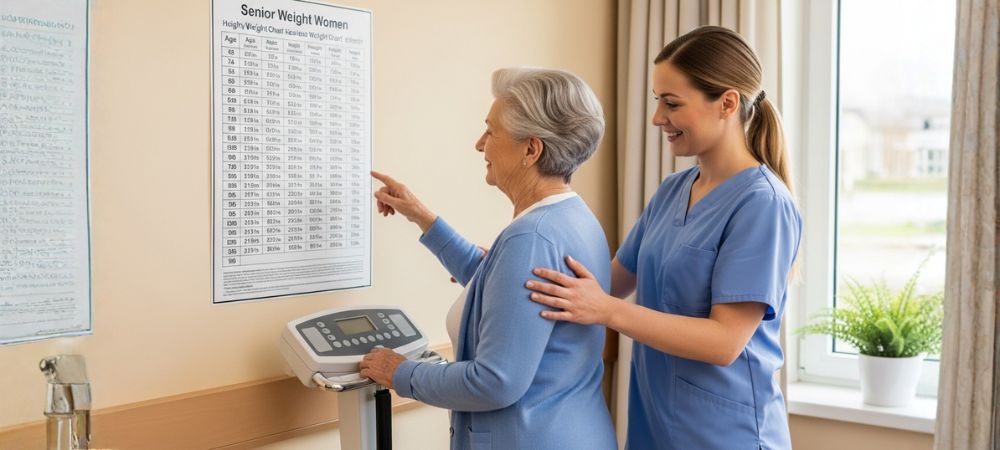
A weight chart for seniors Female, isn’t one-size-fits-all.
It considers age, height, bone density, and body composition—all of which shift after age 50. Unlike generic BMI charts, senior weight charts account for muscle loss and slower metabolism.
So what does a healthy weight look like for a 65-year-old woman who’s 5’3”?
Or a woman in her 70s who’s 5’5”?
A recommended weight chart for females and a weight chart for women by age can show a safe range at a glance.
Why Weight Matters More as You Age
Let’s face it: after 50, everything changes.
According to the CDC, women lose an average of 3–8% of muscle mass per decade after 30, and this accelerates after 60. Add hormonal shifts, bone thinning, and slower metabolism, and weight management becomes more complex.
Here’s why it matters:
- Being underweight can increase fall risk.
- Being overweight can strain joints and affect mobility.
Tracking weight and strength together is crucial in later life.
Use a women’s normal weight chart as a reference, but also focus on muscle quality, balance, and energy.
Recommended Weight Chart for Females (By Age & Height)
Below is a general weight chart for seniors female by age, using adjusted BMI ranges and clinical guidance for women 50+. This weight and age chart for females helps discuss goals with your healthcare provider.
| Height (ft/in) | Age 50–59 | Age 60–69 | Age 70–79 |
| 4’10” | ninety-five–123 lbs | ninety-two–120 lbs | ninety–118 lbs |
| 5’0” | 101–131 lbs | 98–127 lbs | 96–125 lbs |
| 5’2” | 107–138 lbs | 104–134 lbs | 102–132 lbs |
| 5’4” | 114–145 lbs | 110–140 lbs | 108–138 lbs |
| 5’6” | 120–151 lbs | 116–147 lbs | 114–144 lbs |
| 5’8” | 126–158 lbs | 122–153 lbs | 119–150 lbs |
These ranges reflect healthy BMI for aging women, accounting for muscle loss.
Note: Always consult your doctor before making decisions based solely on weight.
Weight Chart for Women Over 50 vs. 60
Let’s compare:
A weight chart for women over 50 generally aligns with adult BMI ranges.
A weight chart for women over 60 shifts focus toward muscle quality, balance, and bone health.
A woman in her 60s with good muscle tone might weigh more yet be healthier than a slimmer woman with poor muscle quality.
Use these insights alongside a normal weight chart for females to set realistic, age-appropriate targets.
How to Calculate Weight Based on Age & Height
Wondering how to calculate weight based on age?
Here are two key methods:
Body Mass Index (BMI)
BMI = weight (kg) ÷ height (m²)
For seniors, a BMI of 23–29 is considered optimal. Slightly higher weight may help with illness recovery.
Waist-to-Height Ratio
Keep your waist circumference less than half your height.
These tools provide guidance, but remember: numbers don’t tell the full story. A 70-year-old woman may weigh more than “average” and still be perfectly healthy.
How Much Should a Senior Woman Weigh? (Expert Insight)
So… how much should a senior woman weigh?
According to the National Institute on Aging, weight goals should prioritize muscle maintenance, balance, and fall prevention, not rigid numbers.
- A 5’4” woman in her 70s: 110–138 lbs
- A 5’0” woman in her 80s: 95–125 lbs
💡 Strength, mobility, and nutrition matter more than size.
Check your normal female weight chart to compare safely.
Healthy Ways to Maintain Weight in Senior Years

Maintaining a healthy weight is about nourishing your body for strength and stability, not dieting.
Try these tips:
- Eat a protein-rich diet (eggs, legumes, lean meats)
- Incorporate weight training for seniors to preserve muscle
- Stay active with walking, chair yoga, or balance exercises
- Focus on fall prevention for seniors for safe mobility
These habits help you stay within your weight chart for senior females target while improving confidence, strength, and overall wellness.
How Loving Homecare Inc. Supports Senior Wellness
At Loving Homecare Inc., we believe aging well means aging strong.
Our senior home care services provide:
- Nutrition and weight support
- Assistance with daily activities
- Companionship to encourage movement
- Help with medication reminders and routine building
Whether gentle encouragement or comprehensive care, our team offers compassion and clinical insight.
Conclusion + CTA
A healthy weight isn’t about size; it’s about strength, safety, and activity.
For senior women, the right weight supports balance, mood, and independence.
At Loving Homecare Inc., we help seniors stay strong, confident, and cared for.
Visit our website to explore personalized senior home care services for every stage of aging.