

30-Sec-Summary
- Delirium typically starts unexpectedly and has greater effects on someone’s ability to focus or be aware than long-term memory does.
- Dementia generally occurs over a period of time, causing a slow, continuous decline from previous functioning levels until there is no longer a pattern associated with the previous level of functioning.
- An older person may experience both phenomena at once, meaning changes that happen suddenly will likely be noticed quickly.
- Family members’ observations can help clinicians to discriminate between the two types of conditions sooner and secure the best treatment more effectively.
When families start comparing dementia vs delirium, they are usually trying to answer a stressful question fast: is this a gradual memory decline or a medical problem that needs help now? A sudden jump in confusion in elderly adults should never be brushed aside. Delirium can appear within hours or days, while dementia usually unfolds much more slowly.
Delirium versus dementia can look similar, but the difference between delirium and dementia is speed and attention span. Delirium starts suddenly, fluctuates, and usually points to an urgent medical trigger. Dementia develops gradually and tends to worsen over time. A person can also live with both at once.
To define delirium, think of it as an acute change in brain function that affects attention, awareness, and thinking. If someone asks what does delirium mean, the practical answer is that the brain is reacting to stress such as infection, dehydration, medication changes, surgery, or another illness. The manifestations of delirium can range from agitation and hallucinations to unusual sleepiness and slowed responses.
Delirium symptoms
The symptoms of delirium often include trouble focusing, disorganized thinking, disorientation, sleep-wake reversal, and behavior that changes from one hour to the next. Families may notice the signs of delirium as restlessness, sudden fearfulness, seeing things that are not there, or being unusually withdrawn. Clinicians generally describe hyperactive delirium as the agitated form and hypoactive delirium as the quieter form that can be mistaken for fatigue or depression.
Delirium vs Dementia: the fastest way to tell them apart
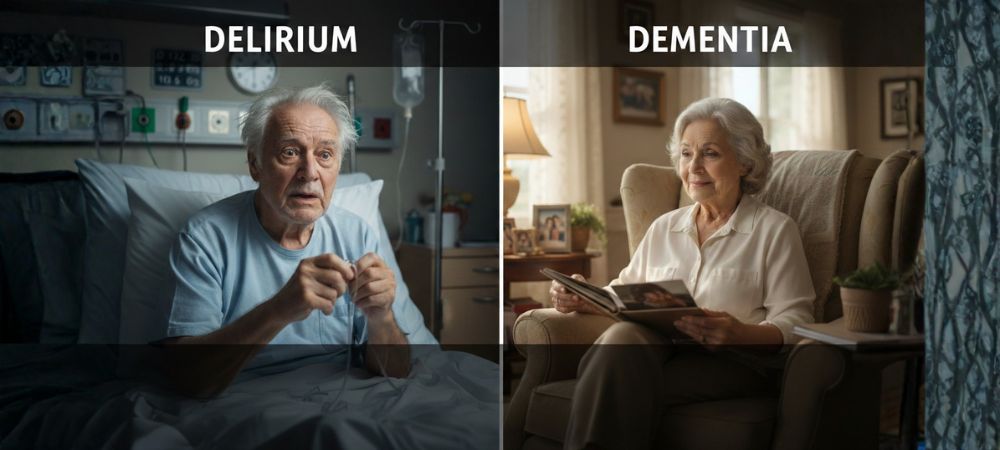
The quickest diff between dementia and delirium is timing. Dementia usually unfolds over months or years. Delirium appears over hours or days and often makes it hard for a person to focus, follow a conversation, or stay alert. That is why families looking up delirium vs confusion are often dealing with a new problem, not just ordinary forgetfulness.
Searches like dementia delirium and delirium dementia often come from families who feel that something is suddenly off. People even type odd comparison phrases such as in contrast to delirium dementia when they are trying to separate a slow cognitive decline from a sharp mental drop. The safest rule is simple: sudden worsening of dementia symptoms should be treated as a medical concern until proven otherwise.
When the pattern is gradual rather than abrupt, long-term support becomes more relevant than emergency evaluation. That is where dementia care can fit naturally, especially for families trying to manage routines, behavior changes, and everyday safety over the long run.
Causes and hospital triggers
The frequent causes of delirium are related to infection, dehydration, medication side effects, lack of sleep, metabolic imbalances, pain, constipation, urinary retention, and major illness. Delirium in older adults is most common during hospital stays because the brain in this population is prone to physical stress, environmental stressors, and multiple causes of delirium.
Due to their frequency & sometimes preventable nature, medication issues warrant special attention from caregivers/family members (e.g., inappropriate dosing). Sudden confusion can be caused by/associated with changes in medication, missed doses (due to lack of adequate medication management), sedating medications, polypharmacy, pharmacy issues, etc.; Therefore, a functional review, such as Senior Medication Management, is important to help reduce the use of unnecessary triggers at home.
Hospital-related episodes have their own search language. Postoperative delirium can appear after anesthesia or surgery. Hospital acquired delirium may begin during an admission. Families also search phrases like hospital delirium, elderly, and hospital psychosis in the elderly when a loved one becomes frightened, agitated, or suddenly unlike themselves in an unfamiliar care setting.
After discharge, steady home support can matter just as much as the medical treatment that came before it. Short-term recovery care fits naturally here because hospital-to-home transitions, post-operative assistance, hygiene monitoring, and status reporting can help families notice changes sooner and support a smoother recovery.
Delirium risk factors
Important delirium risk factors include older age, baseline cognitive impairment, recent surgery, serious illness, dehydration, sensory loss, sleep disruption, and taking multiple medications. Risk is even higher when a person already has frailty or delirium in elderly patients and several health problems at once.
When both conditions overlap
Yes, dementia and delirium can happen together. This overlap is common because people with established memory problems are more vulnerable to new medical stressors. That is one reason delirium and alzheimer’s disease can be difficult for families to sort out without looking closely at what changed, how fast it changed, and whether attention and awareness dropped sharply.
A family often knows the baseline better than anyone else. A practical resource like the caregivers guide to dementia can help caregivers track sleep, attention, mood, eating, and behavior patterns so they are better prepared to describe what is truly new when they speak with a clinician.
Delirium diagnosis
Delirium diagnosis depends on identifying sudden onset, fluctuating attention, altered awareness, and a likely trigger. Clinicians use the person’s baseline as a reference point, which is why family observations are so valuable. In medical records, you may also see the phrase delirium due to known physiological condition when the episode is linked to infection, medication effects, metabolic problems, or another physical cause.
When the question is whether there may also be a slower cognitive decline underneath the acute change, a tool like a cognitive test for seniors can support a broader discussion with a clinician. It is not a substitute for urgent assessment when confusion starts suddenly, but it can be helpful after the acute situation is addressed.
Delirium Treatment
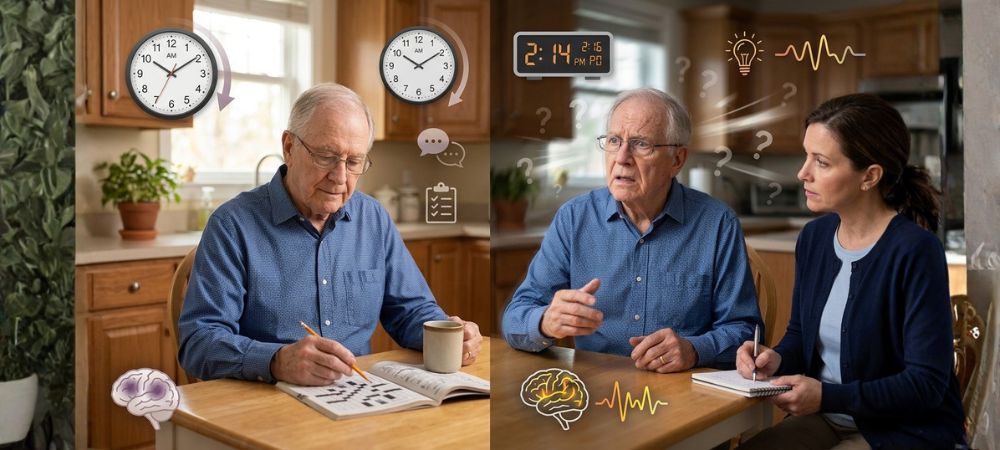
The cause of delirium must be identified for effective treatment. There is no one-size-fits-all solution because delirium treatment will depend on what caused the episode. This could involve treating infections, changing medications, increasing hydration, alleviating pain, promoting sleep, and providing orientation cues such as glasses, hearing aids, clocks, natural light, and familiar voices.
Once the urgent piece is addressed, planning the home environment matters. An in-home care assessment can help families think through fall risk, medication routines, supervision needs, meal support, and what has to change to make daily life safer after a hospital stay or medical setback.
Caregiving after a health crisis can exhaust even the most capable family. That is why respite senior care belongs in the conversation as a separate support option for spouses or adult children who need short-term relief while a loved one stabilizes and a longer plan comes into focus.
Real elderly delirium treatment is not only about the patient in front of you. It is also about reducing chaos around them, supporting recovery routines, and helping the whole household respond without panic. That is where experienced, non-medical home support can make the difference between a rough transition and a manageable one.
If your family needs practical support after evaluation, hospitalization, or a difficult transition home, home care assistance can help turn a confusing situation into a safer daily routine. For families in Greater Whittier, North Orange County, Long Beach, San Gabriel Valley, and surrounding areas, Loving Homecare Inc. positions its services around personalized, non-medical support that helps older adults remain at home with more stability and dignity.